News, training, and people across the Dutch Caribbean
Dutch Caribbean Digital Competence Network
From the network
Welcome to the first DCDC Network newsletter
This is the first edition of a regular update from the network. The aim is simple: keep members across Aruba, Curaçao, and St. Martin in the loop on what is happening, who is involved, and where to plug in. Each issue will share recent stories, spotlight a member of the network, and point to ways to contribute.
This first issue opens with a short onboarding survey to help us see who is in the network, then introduces Marjorie Alfonso, our coordinator in Curaçao, news on a coordinator keynote, two recent posts from the blog, three opportunities worth a look, an open invitation for members to suggest the next feature or write a post, and closes with a long-form feature on the network's first CRAN package release.
— The DCDC Core Team
★ About 5 to 7 minutes
Network onboarding survey
The onboarding survey helps us see who is in the network: what you work on, what challenges you face, and what kind of support would actually be useful. It takes about 5 to 7 minutes. If a 1:1 with a core team member on your research data, open science, or training questions would be useful, leave your contact details on the form and one of us will reach out.
Check your inbox and click the confirmation link to finish subscribing.
Member spotlight
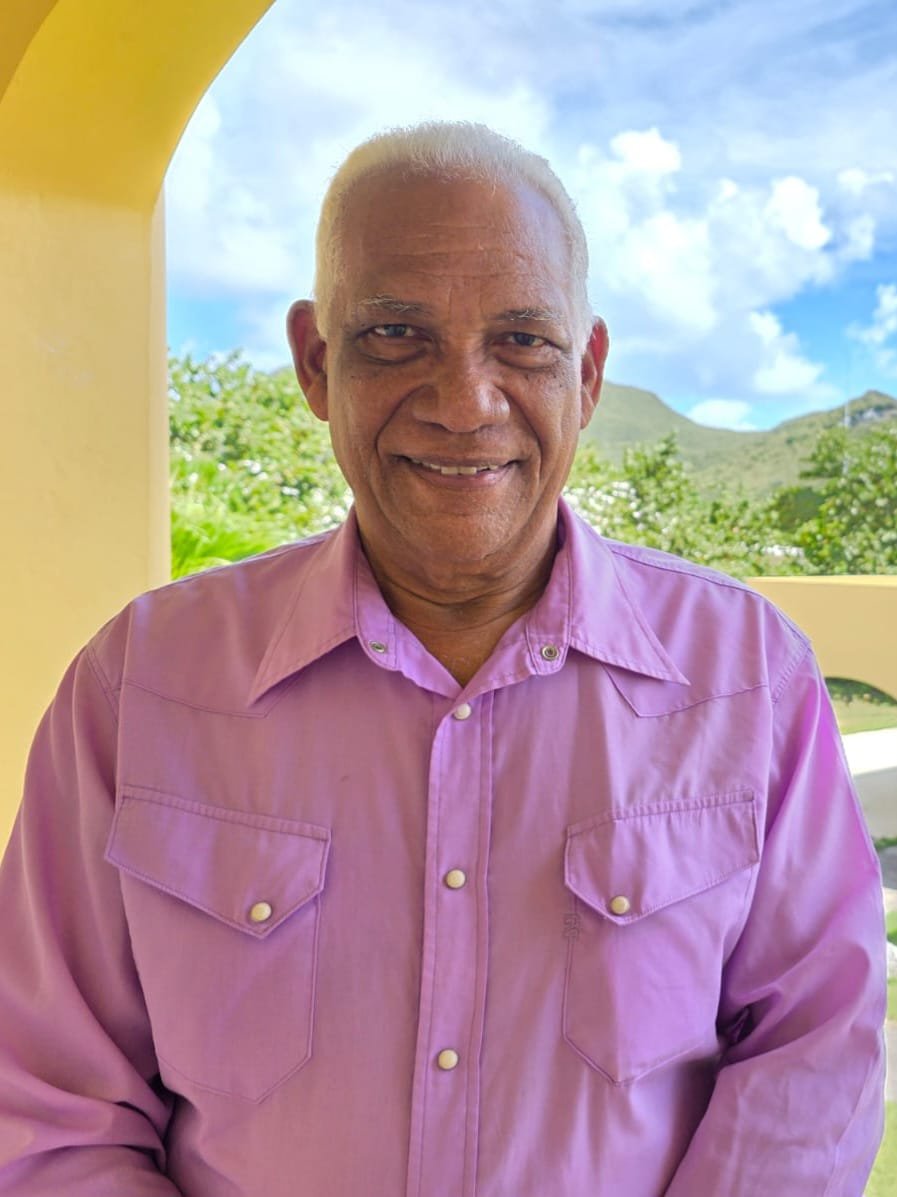
Meet Marjorie Alfonso, coordinator in Curaçao
Marjorie Alfonso
Local Coordinator · Curaçao
University of Curaçao (Library & Research Services)
Marjorie is Information and AI Specialist at the University of Curaçao Library, supporting researchers and lecturers with research tools, digital resources, and emerging technologies. She believes researchers and students on small islands should have equal access to knowledge and the chance to make their work visible internationally. Her hope for the network is stronger collaboration between Caribbean islands and international partners, with more opportunities for training and knowledge sharing.
Raymond Jessurun keynotes Dutch Caribbean Research Week
Drs. Raymond Jessurun
Local Coordinator · St. Martin
Research Coordinator, University of St. Martin
On Tuesday 23 June, Raymond delivers the keynote at the Dutch Caribbean Research Week 2026, anchoring the Culture, Literature & Arts in the Caribbean plenary on the St. Martin conference day. His subject: culture, memory and justice, and the right of Caribbean people to shape the research done about us, with us, and for us.
Raymond's research bridges climate change, disaster risk reduction, labour market and education, Caribbean identity, slavery's afterlives, and community-based work linking culture, heritage, memory, social justice, and policy. The keynote sits at the intersection of all of it.
Three things worth flagging this month, all open to network members across the Dutch Caribbean. Two are free conferences; the third is a funded route to spend time at Oxford in 2027.
Have a workshop reflection, a tool you love, a dataset you wish existed, or a story from your institution? Send a paragraph or a full draft for a feature for consideration.
From Hubble to CRAN: the network's first R package
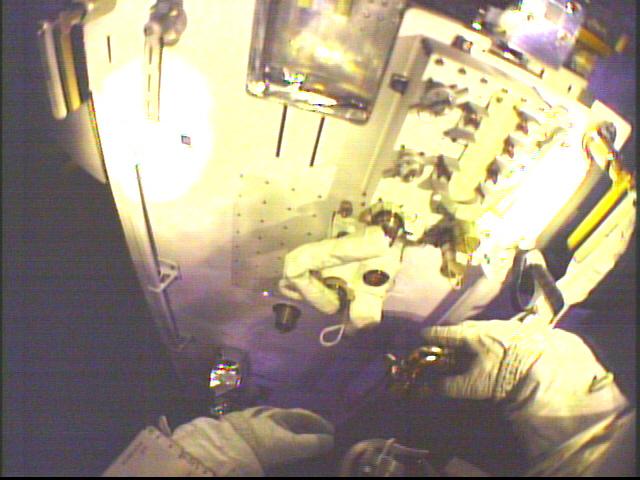
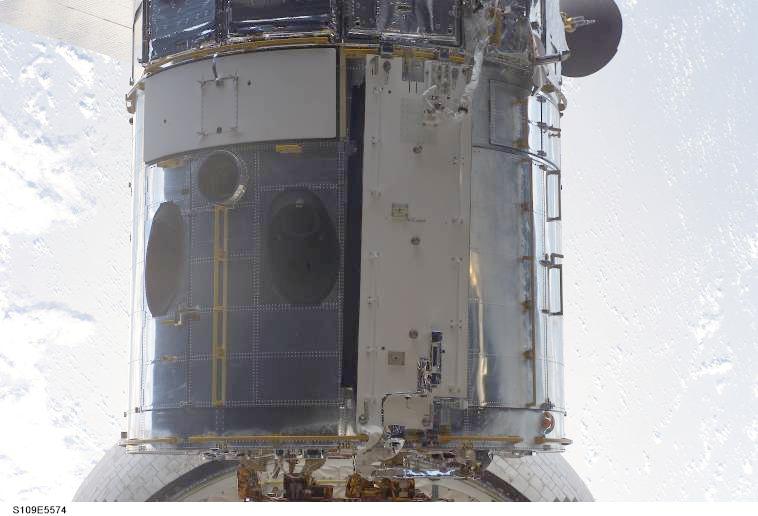
An astronaut prepares to mate Hubble's power cable to A.R.U.B.A. during orbital night, STS-109, 8 March 2002. As the connection was confirmed, "ARUBA" was heard several times over the comms loop. Image courtesy of Edward Cheung's archive (NASA STS-109).
The first time the word "Aruba" was spoken in space was during orbital night above Earth on 8 March 2002. An astronaut on Space Shuttle Columbia's fourth Hubble servicing mission was preparing to mate a power cable from the telescope onto a small relay box. As the connection was confirmed, "ARUBA" came back over the comms loop several times. The box was called A.R.U.B.A., the ASCS/NCS Relay Unit Breaker Assembly. Its job was to cut power to Hubble's instruments instantly if a fault occurred. It had been designed by Edward Cheung, an Aruban engineer working at NASA Goddard. Cheung engineered the backronym so children in his home country would have something concrete to point to on the telescope.
The DCDC Network's first R package, released on CRAN on 15 May 2026, contains a function called aruba(). It returns a row of country-classification data, defaulting to Aruba. The function is a homage in the same style. Cheung's A.R.U.B.A. cuts power on Hubble. Ours, the Annotated Reference for Under-coded Border Areas, returns metadata about an island. Both spell Aruba.
More than two decades later, A.R.U.B.A. is still up there. It has been operating continuously since 2002, and because the radiator it sits on is attached to Hubble only by handrails, it stays in orbit for as long as Hubble does.
The actual problem
The islandcodes package solves the problem of incomplete coverage of the Dutch Caribbean islands when using country-classification codes.
When you join a country-classification dataset onto your data, you rely on ISO 3166-1, the international standard for two- and three-letter country codes. Aruba has its own code, AW. Curaçao has CW. St. Martin (the Dutch side) has SX. So far so good. But Bonaire, Sint Eustatius, and Saba do not have their own ISO codes. They share a single code, BQ, called "Bonaire, Sint Eustatius and Saba (the)" in the standard. In a join, the three islands collapse into one row.
If you are studying tourism flows, demographics, or budget allocations across the BES islands, that collapse is not a rounding error. It is a structural omission. Even where the underlying data exists at the island level, standard tooling will silently aggregate it before you see the result.
There is a second, related problem. The UN-DESA list of Small Island Developing States (SIDS) and the academic classification of sub-national island jurisdictions (SNIJ) are not in any of the standard country-code packages. Joining either onto a research dataset typically means opening a PDF, copying a list of country names by hand, and crossing your fingers that you spelled everything the way your data file did. Most island researchers have a half-corrupted SIDS list living in their downloads folder. We have all written this hand-copied join more than once.
What the package does
islandcodes is a small R package. It does one thing. It ships a curated reference list of 250 countries and territories, classified by SIDS status, SNIJ status, World Bank region, World Bank income group, political association, and the four small-island defining criteria.
If you do not use R, the same classification table is published as a plain CSV under CC BY 4.0 (see Resources below), so Python, Stata, and SPSS users can run the same joins without installing R.
The BES collapse is handled by splitting codes (BQ-BO, BQ-SE, BQ-SA) alongside the ISO standard ones, so the three islands stay separable. The package imports countrycode, the widely used package for country-name resolution, rather than replacing it. If countrycode already handles your case, you do not need islandcodes. If it does not, the predicates and the add_island_cols() joiner pick up where it stops.
Where the data comes from
The classifications in the package are mirrored from a separate repository the DCDC-Network maintains, island-research-reference-data. That repository is the canonical source for the underlying list.
Corrections, additions, and edge cases the list does not yet handle are welcome via GitHub issues on either repository.
The finished installation, photographed by an astronaut with the Electronic Still Camera. The new radiator is mounted on Hubble's side; A.R.U.B.A. is the small white box on the radiator with the two black ports. Image: NASA (S109E5574).
Why CRAN
CRAN packages have a stable citation home, a versioned archive through CRAN's own infrastructure, and a default install path (install.packages) that researchers already trust. For a small package out of a small-island research network, the CRAN listing instead of only sharing the package on GitHub signals that this is reusable, documented, peer-checked infrastructure, not a one-off script.
Review took four days. The reviewer feedback led to one minor change in the license declaration. The package is now live at cran.r-project.org/package=islandcodes.
What is next
A short paper describing the package is queued for the Journal of Open Source Software. A longer applied paper on how often BES collapse and SNIJ omission distort cross-island analyses is on the list after that. Anyone in the network with a use case, a missing classification, or a research project that hit the same friction is welcome to get in touch via rendell.dekort@ua.aw.
In the meantime: install.packages("islandcodes"). The aruba() function is there if you want to wave at Hubble.